
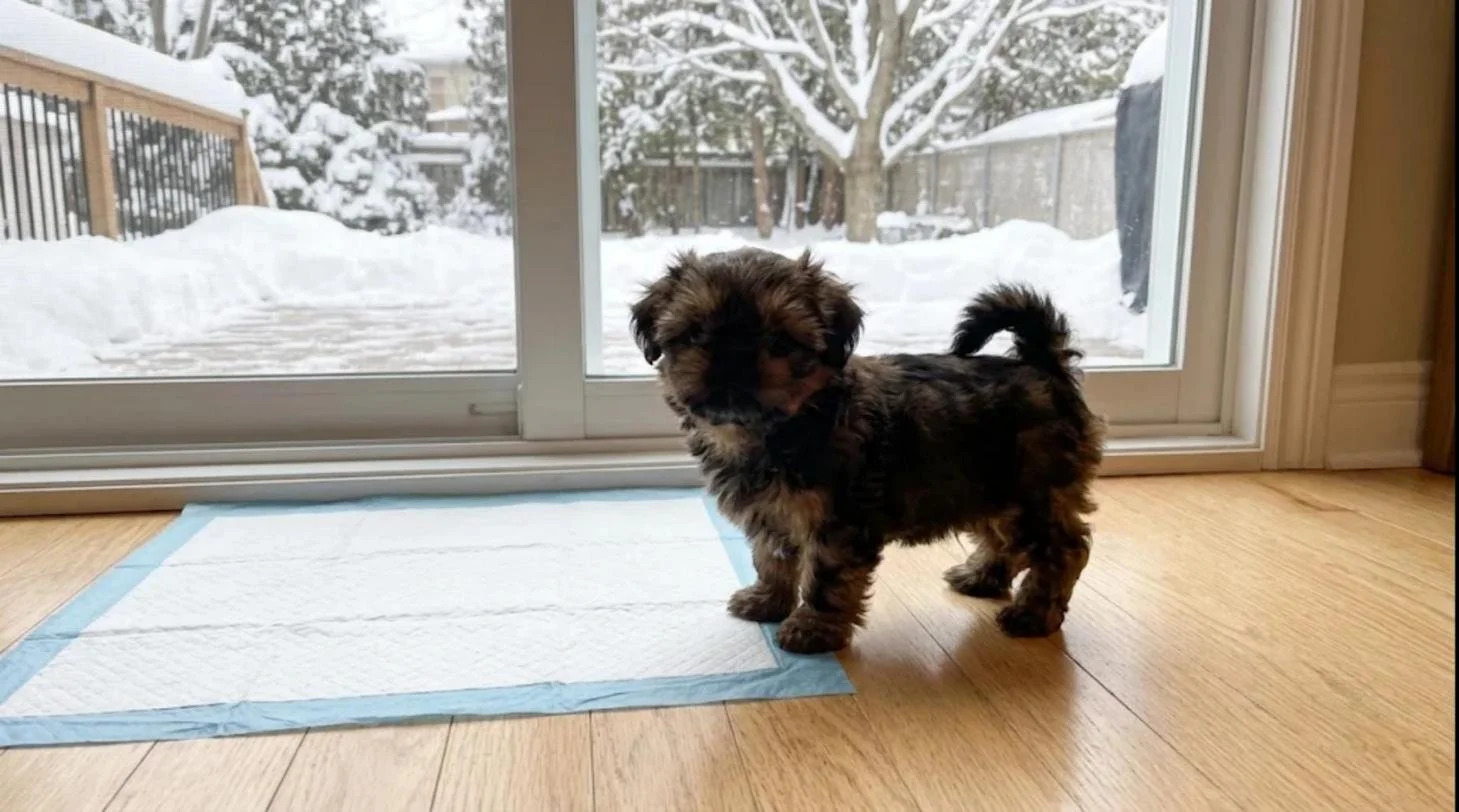
Potty training a puppy is the very first "big project" for most new families, and in Quebec it often starts right when the snow arrives. At Maxanimo, we raise Toy Poodles, Miniature Poodles and Imperial Shih Tzus in La Prairie, and many families welcome their new puppy in late fall or winter. So every year we hear the same question: how do you house train a tiny puppy when it's minus 15 outside? Here is what has worked for us and for our families, step by step.
Why small-breed puppies need a little extra patience
Toy and Miniature Poodles and Imperial Shih Tzus are smart and eager to please, but their bodies are small. That changes a few things:
Tiny bladders. A young puppy can only hold it for a short time. A common rule of thumb is about one hour per month of age, plus one, during the day.
Small accidents are easy to miss. A puddle behind the couch can go unnoticed, and the smell invites the puppy back to the same spot.
They feel the cold fast. A 2 to 3 kg puppy loses heat quickly, so long waits outside in January simply don't work.
None of this means small breeds are "hard" to potty train. It just means the plan has to be consistent, and adapted to our winters.
Set up a routine before the first day
Puppies learn by repetition. The more predictable the day, the faster the habit forms. Take your puppy to the potty spot:
First thing in the morning, before anything else
Within 10 to 15 minutes after every meal
After every nap
After play sessions or excitement (visitors, kids coming home)
Last thing at night, before bed
Feed meals at the same times every day and pick up the water bowl about two hours before bedtime. For a full daily schedule, you can follow our guide on how to create the perfect routine for your new puppy.
Pee pads, litter box or outside? Choosing your method in winter
Many families in Montreal and on the South Shore live in condos or apartments, and some puppies arrive in the middle of a cold snap. You have three good options:
Outside from day one. Best if you have easy access to a yard. Clear a small patch of snow close to the door so your puppy doesn't have to wade through deep snow.
Pee pads or a dog litter box indoors. Useful for very young Toy puppies, apartments, or extreme cold days. Place them in one fixed spot, away from the food and the bed.
A combination. Pads on the coldest days and at night, outside the rest of the time. This works well, as long as the pad always stays in the same place and you slowly move toward outdoor potty breaks.
Whatever you choose, be consistent. Changing the spot every few days confuses a puppy more than anything else.
Potty training a puppy in the cold: our winter tips
Quebec winters are part of life here, and your puppy can learn to go outside even in January. A few things make it much easier:
Keep it short. Go out, wait a few minutes at the potty spot, praise, and come back in. Save the play time for indoors.
Use the same door and the same patch. The scent helps your puppy understand why you're there.
Dress for the weather. A small coat or sweater helps short-haired or freshly groomed puppies, and boots or paw balm protect against salt and ice.
Use a cue word. Say "go potty" (or any word you like) every time. Soon your puppy will associate the word with the job.
Dry the paws when you come in. Wipe off salt and snow so the paws stay healthy.
For more on keeping a small puppy warm and safe, read our small dog winter care guide for Quebec.
💡 Remember: the best reward happens in the first two or three seconds. Praise your puppy and give a tiny treat right when they finish, not when you are back inside.
What to do (and not do) after an accident
Accidents are normal, even with a great routine. How you react matters a lot.
Don't scold or punish. Puppies don't connect a punishment with something they did a few minutes ago. It only teaches them to hide when they need to go.
Interrupt calmly if you catch them in the act. A gentle "oops," then carry your puppy to the right spot.
Clean with an enzyme cleaner. Regular household cleaners don't remove the smell your puppy can detect.
Watch for signs. Sniffing the floor, circling or walking away from you usually means "I need to go now."
At Maxanimo, we always use positive reinforcement, and potty training is no exception. Calm, patient and consistent wins every time.
Crate, playpen and supervision
When you can't watch your puppy, a properly sized crate or a small playpen keeps the learning on track. Most puppies naturally avoid soiling where they sleep. Keep crate time reasonable for your puppy's age, and always take them to the potty spot as soon as they come out.
When your puppy is free in the house, keep them in the same room as you. Little by little, as the accidents become rare, you can give them access to more of the home.
How long does it take?
Every puppy is different. Many small-breed puppies understand the basics within a few weeks, and are fairly reliable somewhere between 4 and 6 months, with the occasional accident along the way. Winter, a move or a change in routine can bring a few setbacks, and that's okay.
If your puppy suddenly has many accidents after doing well, drinks a lot more than usual, or seems uncomfortable when peeing, book a visit with your veterinarian to rule out a health issue.
FAQ
At what age can I start potty training my puppy?
You can start the day your puppy comes home, usually around 8 to 10 weeks. Ask your breeder what your puppy is already used to (pads, a litter box or newspaper) so you can keep the same setup for the first days.
Can I use pee pads and still teach my puppy to go outside?
Yes. Many families in Quebec use pads during the coldest weeks and at night, then move to outdoor breaks. Keep the pad in one fixed spot and gradually bring it closer to the door before phasing it out.
My puppy refuses to go outside in the snow. What can I do?
Clear a small patch of grass or ground near the door, keep outings short, and use your cue word. A warm coat helps. Reward generously the moment your puppy goes, and be patient: most puppies get used to the snow within a few days.
Ready to welcome your puppy home?
Potty training takes a bit of patience, but it's also a great way to bond with your new companion. If you'd like a Toy Poodle, Miniature Poodle or Imperial Shih Tzu raised with love in our home, take a look at our available puppies, or contact us. We are always happy to answer your questions, before and long after your puppy comes home.
— Maxime, Maxanimo